

Your dog is sleeping deeply. Nothing wakes them up — not the doorbell, not the pressure cooker, not your kid running through the house. You start to wonder: are deaf dogs just sleepier?
The short answer: no. Deaf dogs don’t sleep more hours than hearing dogs. Their sleep cycle is the same. What’s different is how they sleep — and once you understand that, a lot of other things start to make sense too.
If you’ve recently discovered your dog has hearing loss, or you’ve adopted a deaf dog and are trying to figure out what’s normal, this guide covers everything you need to know.
Do deaf dogs actually sleep more?
Not more hours — but deeper, and more undisturbed.
A hearing dog wakes up dozens of times throughout the day and night because of sounds: a car parking outside, a cat on the roof, a family member coughing in another room. These micro-interruptions are so normal that most dog owners don’t even notice them.
A deaf dog skips all of that. Without constant auditory input pulling them out of rest, their sleep is quieter and more consolidated. They look like they’re sleeping more because they’re harder to wake up — not because their body needs more sleep.
The total sleep duration for an adult dog is typically 12 to 14 hours across a 24-hour period, regardless of hearing status. Deaf dogs fall within the same range.
For more on what’s normal when it comes to dog sleep, our dog sleep behavior hub covers the full picture.
Why deaf dogs sleep so peacefully
Think about the last time you had a truly quiet night — no traffic, no notifications, no household noise. The quality of sleep is different.
For deaf dogs, every night is like that.
A few reasons their rest tends to be deeper:
No auditory startles
Sudden sounds are one of the main causes of interrupted dog sleep. Deaf dogs don’t experience them.
Reduced environmental vigilance
Hearing dogs are always somewhat “on” — monitoring for sounds that might matter. Deaf dogs process their world through smell, sight, and vibration. During sleep, those senses are naturally less active. They go deeper into rest.
Greater sense of safety (when handled right)
A deaf dog raised in a calm, predictable environment with consistent waking routines often sleeps very soundly. They’ve learned there’s nothing to be anxious about.
Age-related factors
Many dogs develop hearing loss as they age. Senior dogs naturally sleep more than younger dogs anyway — so if your older dog is sleeping a lot and appears to have lost hearing, that’s two things working together, not just one. You may also want to read about dog sleeping positions. You may also want to read about odd sleeping spots.
How to create a safe sleep space for your deaf dog
A few adjustments make a real difference when it comes to deaf dog sleep.
Pick a predictable spot
Deaf dogs rely on visual and spatial cues to understand their environment. Keeping their bed in the same place helps them feel oriented and secure.
Add familiar scents
An old t-shirt or a blanket with your scent is more meaningful to a deaf dog than you might think. Without sound to locate you, your scent becomes a powerful comfort signal.
Use a visual cue at bedtime
A consistent hand signal for “it’s sleep time” — something simple like pointing to their bed — gives your dog a reliable anchor. Pair it with a treat a few times and they’ll catch on quickly.
Keep routines consistent
Deaf dogs tend to rely on routine more than hearing dogs. Same feeding time, same walk time, same bedtime. Predictability reduces anxiety.
Never startle them awake
This is the most important one. A deaf dog pulled out of deep sleep by sudden touch can react with fear — even snapping, not out of aggression, but instinct. Always wake your deaf dog gently: tap the floor near them to create a vibration, or let them catch your scent before you make contact. Give them a moment to register you’re there before you touch them. Teach this to everyone in your household, especially children.
Why do dogs go deaf and which dogs are at higher risk?
Deafness in dogs is more common than most people realise. It can be present from birth (congenital) or develop over time (acquired).
Congenital deafness is often linked to coat genetics. According to VCA Hospitals, breeds with piebald or merle coat genes have a significantly higher rate of congenital deafness — including Dalmatians, Australian Shepherds, Border Collies, Bull Terriers, and Boxers. Research by Dr. George Strain at Louisiana State University found that around 8% of Dalmatians are born bilaterally deaf, and about 22% have unilateral (one-sided) hearing loss.
In India, this is worth knowing if you’ve adopted a white-coated or merle-patterned dog — including certain white indie dogs or street dogs with unusual markings. Undiagnosed hearing loss is fairly common in this group, and many are labelled “stubborn” or “disobedient” when they simply cannot hear. According to the AKC’s guide to deafness in dogs, over 30 breeds have a documented genetic predisposition, but the piebald gene can appear in mixed-breed and indie dogs too.
Acquired deafness can develop due to:
- Age-related degeneration (the most common cause in senior dogs)
- Chronic ear infections that damage the inner ear
- Exposure to sustained loud noise over time
- Certain medications, including some antibiotics
- Severe ear blockages from wax or debris buildup
The gold standard for diagnosing deafness is a BAER test (Brainstem Auditory Evoked Response), available at specialist veterinary clinics. If you suspect your dog has hearing loss, consult your vet — a proper diagnosis helps you adjust their care appropriately.
Hand signal training, bonding, and mental stimulation
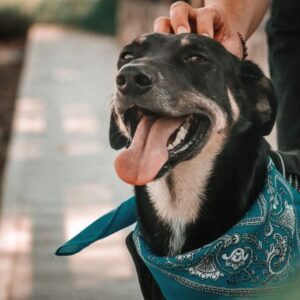
Deaf dogs can learn everything a hearing dog can — it just happens through visual cues instead of verbal ones. Many deaf dogs pick up hand signals faster than hearing dogs learn voice commands, because they’re already attuned to watching you closely.
Start with the basics
A point downward for “sit,” an open palm for “stay,” a beckoning motion for “come here.” Be consistent — same gesture, every time, from every person in the household.
Keep sessions short and reward-based
Five to ten minutes, high-value treats, lots of visual praise (a thumbs up or a big smile genuinely works). Deaf dogs are working hard to read you — they tire mentally faster than you might expect. Small, natural treats are ideal; our homemade dog cookies are the right size for training rewards without overfeeding.
Be patient with older dogs
If you’ve adopted a rescue who has never had training, start slow and expect it to take longer. Our article on how late is too late to train a dog covers this in detail — the short version is that it’s never too late, but consistency matters more than anything.
Build the bond through presence
Without verbal communication, physical proximity and body language become your main language with your dog. Spend time sitting together, try slow walks where they can sniff and explore, use gentle massage. A deaf dog that trusts you completely is a deeply settled dog.
Mental stimulation is essential
Without auditory input, deaf dogs need other forms of engagement: puzzle feeders, scent games (scattering treats in grass or hiding them around the house), and learning new hand signals. A mentally tired dog sleeps well. A bored dog, deaf or hearing, does not.
Keeping your deaf dog safe
The main risks for deaf dogs come from one place: they can’t hear traffic, other animals approaching, or warnings called out by their owner.
Always leash them outdoors near roads
This is non-negotiable. A deaf dog off-leash near traffic cannot be recalled reliably if something dangerous approaches.
Secure your space
If you have a garden or terrace, check it’s fully enclosed. Deaf dogs can wander without realising they’ve left safe ground.
Use a tag or vest
A “deaf dog” ID tag or harness patch tells strangers not to approach from behind or make sudden movements. Useful if your dog is walked by different family members or in busy areas.
Consider a vibration collar for recall
Not a shock collar — a vibration collar. A gentle buzz paired with a visual come-here hand signal can work as a long-distance recall cue in safe, enclosed spaces. This takes time to train but is worth it.
Approach from the front, always
Coming from behind, even affectionately, can startle a resting deaf dog. Get into the habit, and teach it to everyone who interacts with your dog.
If you’re dealing with barking from your deaf dog, that’s a separate topic worth reading about: do deaf dogs bark more looks at why it happens and what you can do.
Frequently asked questions
Do deaf dogs know they are deaf?
No. Dogs have no concept of “hearing” as a sense they can reflect on. Your deaf dog experiences the world the way they always have — through smell, sight, touch, and vibration. They don’t miss sound because they have no frame of reference for it.
How do you wake up a deaf dog safely?
Never touch them suddenly. Instead, tap the floor near them a few times to create a vibration, or hold a treat near their nose and let the scent reach them first. Once they stir, then make contact. With consistency, most deaf dogs learn a gentle shoulder touch as a reliable “wake up” signal.
Can deaf dogs live a normal life?
Absolutely. Deaf dogs play, learn, bond, and thrive just like hearing dogs. The main adjustments are communication-based (hand signals instead of voice) and safety-based (leash near roads, secured spaces). Thousands of deaf dogs are beloved family pets with full, happy lives.
What dog breeds are most prone to deafness?
Dalmatians, Australian Shepherds, Border Collies, Bull Terriers, and Boxers have elevated rates of congenital deafness. Any dog with merle or piebald coat genetics — including white-coated indie dogs — can carry the same predisposition.
Do deaf dogs bark more?
Some do. Deaf dogs can’t monitor their own volume, so they may bark louder or more frequently than hearing dogs. Read our article on whether deaf dogs bark more if this is something you’re dealing with.
Does it take a special kind of person to adopt a deaf dog?
Patient, yes. Special, no. Deaf dogs don’t need a professional trainer — they need someone willing to communicate differently, keep routines consistent, and stick with hand signal training until it becomes second nature. If you’re considering adopting a dog in India, don’t let hearing loss put you off a dog you connect with.
To sum it up
Deaf dogs don’t sleep more than hearing dogs. They sleep better — deeper, more peacefully, free from the auditory interruptions that keep hearing dogs on alert.
If your dog has hearing loss, the key things to get right are:
- Wake them gently, always from the front or with a vibration cue
- Keep their sleep space and daily routine consistent
- Invest in hand signal training early, with small reward-based treats
- Keep them leashed near traffic and secured in outdoor spaces
- Get a BAER test from your vet if you suspect deafness but haven’t confirmed it
The adjustment period is real, but it’s short. Most dog owners who’ve lived with a deaf dog say the bond they build — rooted in body language, presence, and trust — is one of the most rewarding they’ve had with any dog.