
Our dog Blessy was 11 years old when she learned to fetch the newspaper without tearing it. Eleven. She’d lived a whole decade before we even tried teaching her that specific trick. Within 3 months, she had it down.
So when people ask how late is too late to train a dog, the honest answer is: it’s almost never too late. Age matters, but it doesn’t disqualify.
Whether you’ve adopted an older dog, missed the puppy window, or you just want to teach your 5-year-old a new command, this guide covers what you need to know. Including what changes with age, what doesn’t, and how to actually make training work with an older dog (or a rescued indie dog who has never been trained at all).
What is the best age to start training a dog?

The ideal window for foundational training is 8 to 16 weeks. Puppies at this stage absorb socialization, basic commands, and household rules more easily than at any other point in their life. Their brains are wiring up fast, and everything sticks.
Between 4 and 6 months, a second learning window opens. This is when leash walking, crate training, and daily routines really start to consolidate.
But here’s what most people get wrong: they treat these windows as the only windows. They’re not. Dogs continue learning throughout their lives. The windows make certain things easier, they don’t make learning exclusive to puppies. According to the AKC’s puppy training timeline, consistent training at any life stage is beneficial and worth pursuing.
Our Labrador Enzo had learned multiple commands by the time he was 5 months old. And Blessy, at 11, proved that the learning never really stops.
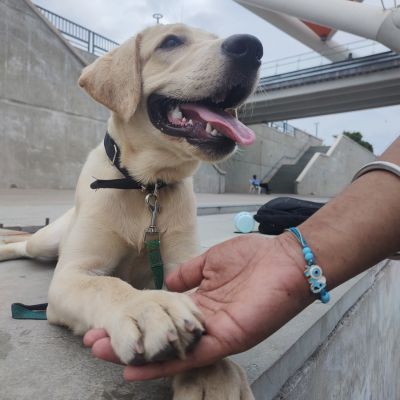
Can you train an older dog?
Yes. Older dogs can learn, and in some ways, training a senior dog is actually easier than training a puppy.
Adult dogs have longer attention spans. A 6-year-old dog will hold focus during a 5-minute training session far better than a 3-month-old puppy who gets distracted by a leaf. They’ve also developed some impulse control, which puppies completely lack.
What changes with age isn’t the ability to learn, it’s the pace. An older dog may take a few extra sessions to solidify a new command. If they’ve had years of reinforced habits (pulling on the leash, jumping on guests), you’re working against an established pattern, which takes longer than teaching something fresh.
Their physical stamina matters too. A senior dog can’t handle the same intensity as a young dog, so shorter sessions matter more.
But the cognitive capacity to learn? That stays. VCA Hospitals confirms that healthy older dogs retain the ability to learn new commands and behaviours throughout their lives. If your older dog is suddenly struggling to learn things that used to come naturally, that’s worth a vet visit to rule out cognitive decline, but in most cases, a healthy older dog is a capable learner.
You can calculate your dog’s age in human years to get a better sense of where they are developmentally before you start.
Benefits of training an older dog
Training an older dog isn’t just possible, it’s genuinely good for them.
Mental stimulation
Learning new things keeps your dog’s brain active. For senior dogs especially, mental engagement reduces restlessness, anxiety, and destructive behaviour. A dog with something to figure out is a calmer dog.
Strengthened bond
Training sessions are focused, communicative time together. The patience and small victories build trust in a way that daily walks alone don’t.
Solving real behaviour problems
Most people come to training later because a specific issue has gotten bad enough to deal with. The good news is that older dogs can unlearn problem behaviours, excessive barking, leash pulling, jumping on people, just as effectively as they can learn new commands.
Easier integration for adopted dogs
Many older dogs arrive in homes as rescues with no training history. Clear training helps them understand the new environment, reduces separation anxiety, and dramatically speeds up the settling process.
How to train an older dog effectively
The fundamentals don’t change, but a few adjustments make a real difference when working with older dogs.
Keep sessions short
5 to 10 minutes, 2 to 3 times a day. Senior dogs tire faster and can get frustrated in long sessions. Short and successful beats long and exhausting every time.
Use high-value treats
Positive reinforcement with food is the most effective training method for dogs of any age. For older dogs, small, soft treats work best, easy to chew quickly, gentle on older teeth. Banana Peanut Butter Cookies broken into small pieces are a great training reward. You can also browse WoofTroop’s full range of homemade dog treats, all made fresh to order, no preservatives, from ingredients you’d recognize.
Account for physical limitations
Don’t ask a dog with sore hips to hold a long down-stay on a hard floor. Work around what’s physically comfortable. If your dog has joint issues, ask your vet what positions are appropriate before you begin.
Be consistent, not intense
Same cue, same reward, same timing. Dogs learn through repetition, not willpower. A 10-minute daily session beats a 2-hour weekend session every single time.
Train during cooler hours
If you’re in India and training outdoors, avoid training between 11am and 5pm in summer. Your dog’s focus drops significantly when they’re overheated. Early morning or after sunset are your best windows. For apartment training, keep the space cool and free of distractions before you start.
Be patient with the pace
If your dog is learning something they’ve never done before, week 1 often looks like nothing is happening. Week 2 looks like maybe something. Week 3 is when it clicks. Don’t give up before week 3.
What can you teach an older dog?
More than most people expect.
Basic obedience commands are learnable at any age: sit, stay, come, down, leave it, drop it, and heel. Most dogs acquire these within a few weeks of consistent training regardless of how old they are.
Leash manners are one of the most common reasons people start training an older dog. Yes, a dog who has been pulling for years can learn to walk calmly. Stop the moment the leash goes tight. Wait. Resume only when the leash relaxes and reward the calm. It takes a few weeks of daily practice, but it works.
Crate training is achievable with older dogs, especially when a new routine requires it or when they need a settled space in a multi-dog household.
Tricks, yes, genuinely
Blessy is proof. Fetch, spin, shake hands, touch. These aren’t frivolous additions, tricks are mental exercise, and that matters for senior dogs. A dog who learns new things stays sharper.
New household rules
An older dog moving into a new home can absolutely learn what’s expected. It just needs to be taught clearly, consistently, and with patience.
Training an indie dog who was never trained
If you’ve adopted an older indie dog, an Indian street dog who has spent years living by their own instincts, you’re working from a different starting point than someone training a house-raised pet.
Indie dogs are smart and perceptive. Most have survived on street instincts, which means they read environments and people well. But they’ve had little or no formal training, and many have histories of fear, unpredictability, or learned survival behaviours that don’t fit a home setting.
The first step isn’t commands, it’s trust. Before you introduce “sit” or “stay,” spend 2 to 3 weeks just living together calmly. Let your dog learn that you’re safe, that food comes reliably, and that the home is not a threat. Once they’re settled, they’ll be far more receptive to learning.
Keep early training sessions in a quiet room with no strangers or other dogs around. Use high-value food rewards, street dogs are almost always food-motivated. Keep cues simple and consistent. Celebrate small wins. Even “sat calmly near me without flinching” is real progress in the first few weeks.
Don’t measure against breed dogs or timelines from Western training guides. Indie dogs can be just as trainable, but they may need a few extra weeks to build the confidence to engage with training at all. If you’ve recently brought one home, our guide to adopting a dog in India covers the first few months in detail.
Frequently asked questions
Is it too late to train a 5-year-old dog?
No. A 5-year-old dog is an adult, not a senior, and has strong learning capacity. Training at this age is entirely normal and effective. The methods are the same as with any dog, positive reinforcement, short sessions, daily consistency.
Can you train a 10-year-old dog?
Yes, though factor in their physical condition. Mentally, most 10-year-old dogs are still capable learners. Physically, avoid positions or session lengths that cause discomfort. If your dog shows signs of cognitive decline (disorientation, forgetting familiar commands), consult your vet before starting a new training programme.
How do I train an older dog that was never trained?
Start with sit, it’s the easiest first command and builds confidence quickly. Use a treat held above your dog’s nose and move it slightly back over their head. Most dogs naturally lower into a sit. Mark it with “yes” and reward immediately. Repeat 5 to 10 times per session. Progress feels slow at first, but by week 3 most dogs show real, consistent improvement.
Can indie dogs be trained?
Absolutely. Indie dogs are intelligent and typically very food-motivated, which makes them excellent candidates for positive reinforcement training. The key difference is building trust before formal training. Spend the first 2 to 3 weeks letting your dog settle into the home, then begin short, calm sessions in a low-distraction space.
What is the easiest command to teach an older dog?
Sit is almost universally the easiest starting point. It requires minimal physical effort from your dog, produces a fast result with the treat-lure method, and builds momentum for everything else. Once sit is reliable, stay and come follow naturally.
The bottom line
Training a dog is almost never about age, it’s about patience, consistency, and the right motivation. Whether your dog is 2 years old or 12, the capacity to learn is there.
Start with short sessions, reward generously, and don’t give up before the third week. Most dogs will surprise you with what they can pick up, regardless of how late you’re starting.
For more on understanding your dog’s behaviour at any age, explore WoofTroop’s dog behaviour guides, written for Indian dog parents, with India in mind.